

A Pre-Raphaelite Primer
An introduction to Victorian Medievalism, plus a reading list

In the corner of a whitewashed bedroom cowers a teenage girl. Her untidy curls of red hair stand out against a golden halo and bright-blue sheet. The picture is flat, hard, and chalky. This combination of naturalism and spiritual intensity is rather uncanny — unsettling, austere, and powerful all at once.
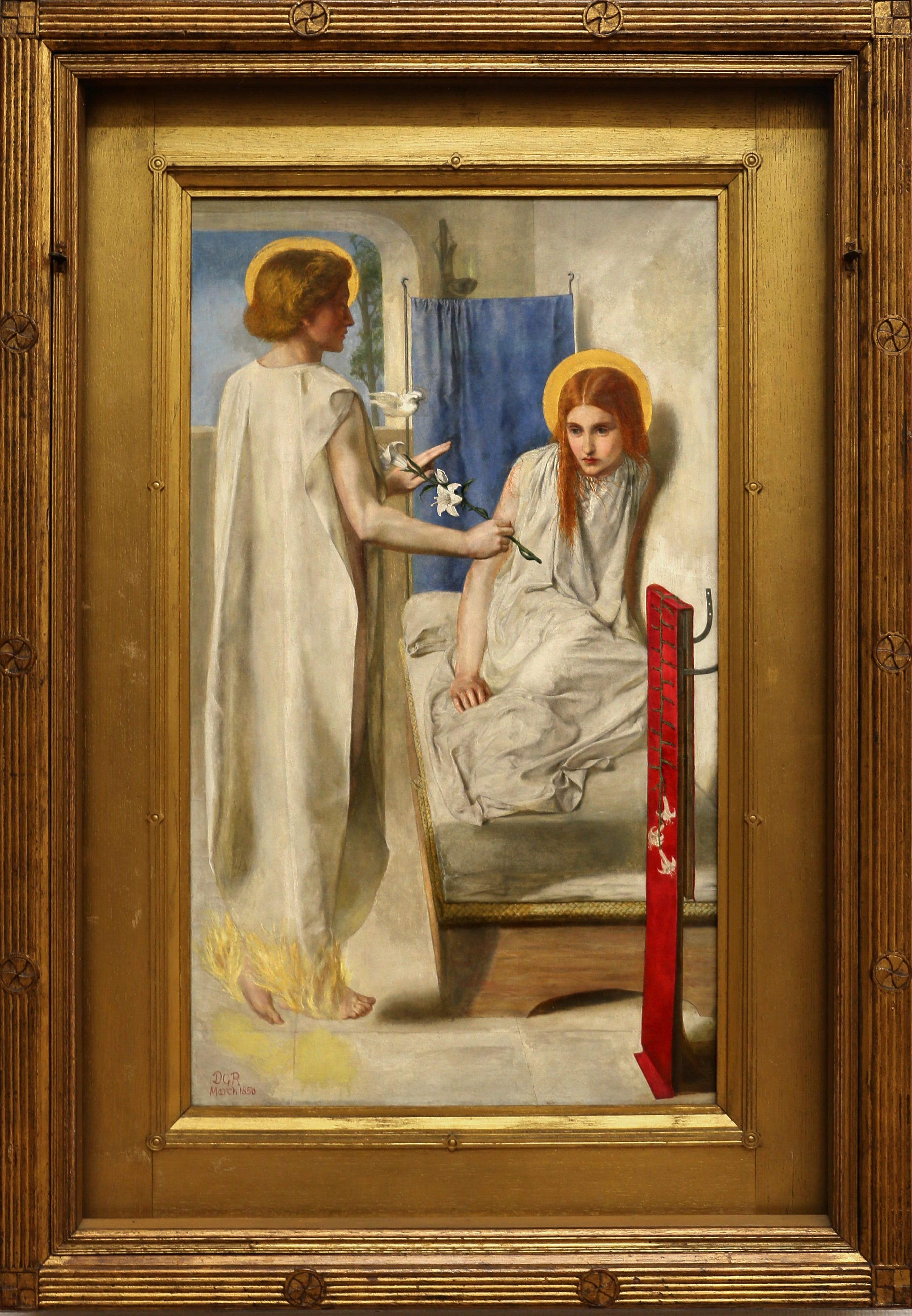
Over the girl looms a floating, flame-footed angel. This angel carries a sheaf of lilies, which are a symbol of purity, and also — strangely enough — of Renaissance Florence.
The presence of these lilies, as well as that of the shining, golden plates around the figures’ heads, and the holy dove in the upper-centre, tells us that the painter, Dante Gabriel Rossetti, is referencing late-medieval religious art.
Although Rossetti’s painting is Victorian, it absolutely smacks of the works of early Renaissance artists, like Fra Angelico and Filippo Lippi. These were the painters who married the flat symbolism of Christian iconography with Classical perspective at the beginning of the Renaissance.
While the early-Renaissance works which Rossetti is emulating have elements of naturalism, their focus is primarily spiritual, and, ultimately, narrative. The theatrical, muscular drama of the High Renaissance (Michelangelo, Raphael) comes later, in the sixteenth century. And it’s precisely this drama which Rossetti, the Victorian, is rejecting.
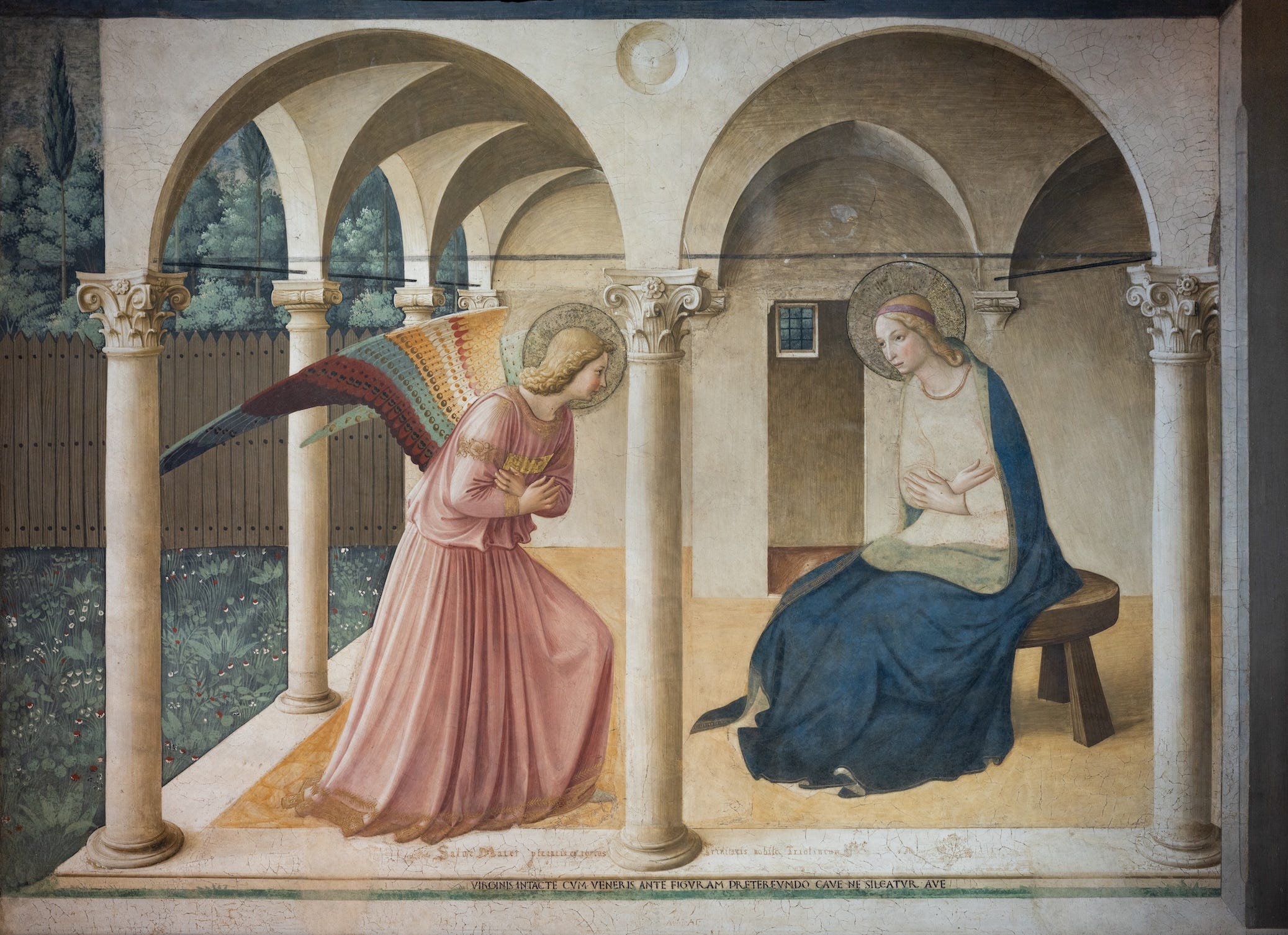
Both the Rossetti painting above, and this Fra Angelico fresco from the 1440s, are interpretations of The Annunciation — the scene in the New Testament when the angel Gabriel informs the Virgin Mary of her pregnancy.
There are clear similarities between the Rossetti and the Fra Angelico. For instance: in the intimate relationship between the angel and virgin, in the slightly surreal architectural context, and the shared, cool colour scheme.
Though Fra Angelico’s is more iconographic, and certainly more timeless, and Rossetti’s shows modern sentimentality, both are getting at the same thing. Both are attempting to tell a visual story in the clearest, most powerful terms.
But now look at The Annunciation by Peter Paul Rubens.
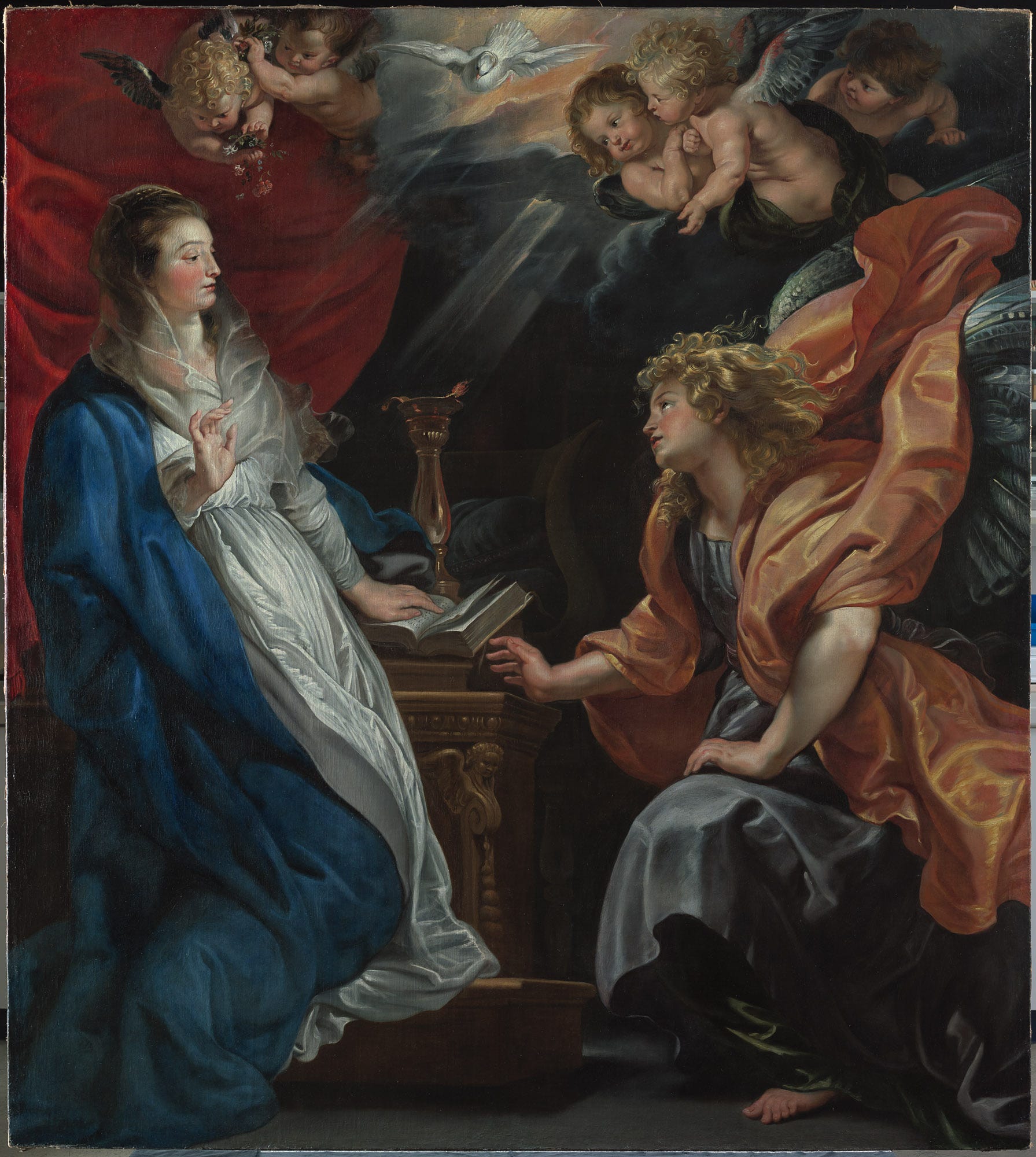
This painting — this sumptuous, melodramatic, showy-off painting — is the antithesis of Pre-Raphaelitism. It is an orgy of Baroque style. Look at the swirling drapery, chubby putti, fluffy clouds, and high contrast. It is a painting of excess and exaggeration.
Fra Angelico’s spiritual intensity and simplicity is nowhere to be found. Instead, here, Rubens has prioritised richness, excess, and opulence.
This is exactly what the Pre-Raphaelites were reacting against. It exemplifies the kind of art the Pre-Raphaelites thought had corrupted painting after the High Renaissance. It is demonstratively grand, sensuous, rhetorical, and heavily mannered.
Rossetti and his friends were trying to restore art to the devotional stillness of the time before Raphael…
So, that’s how you get ‘Pre-Raphael-ite’.
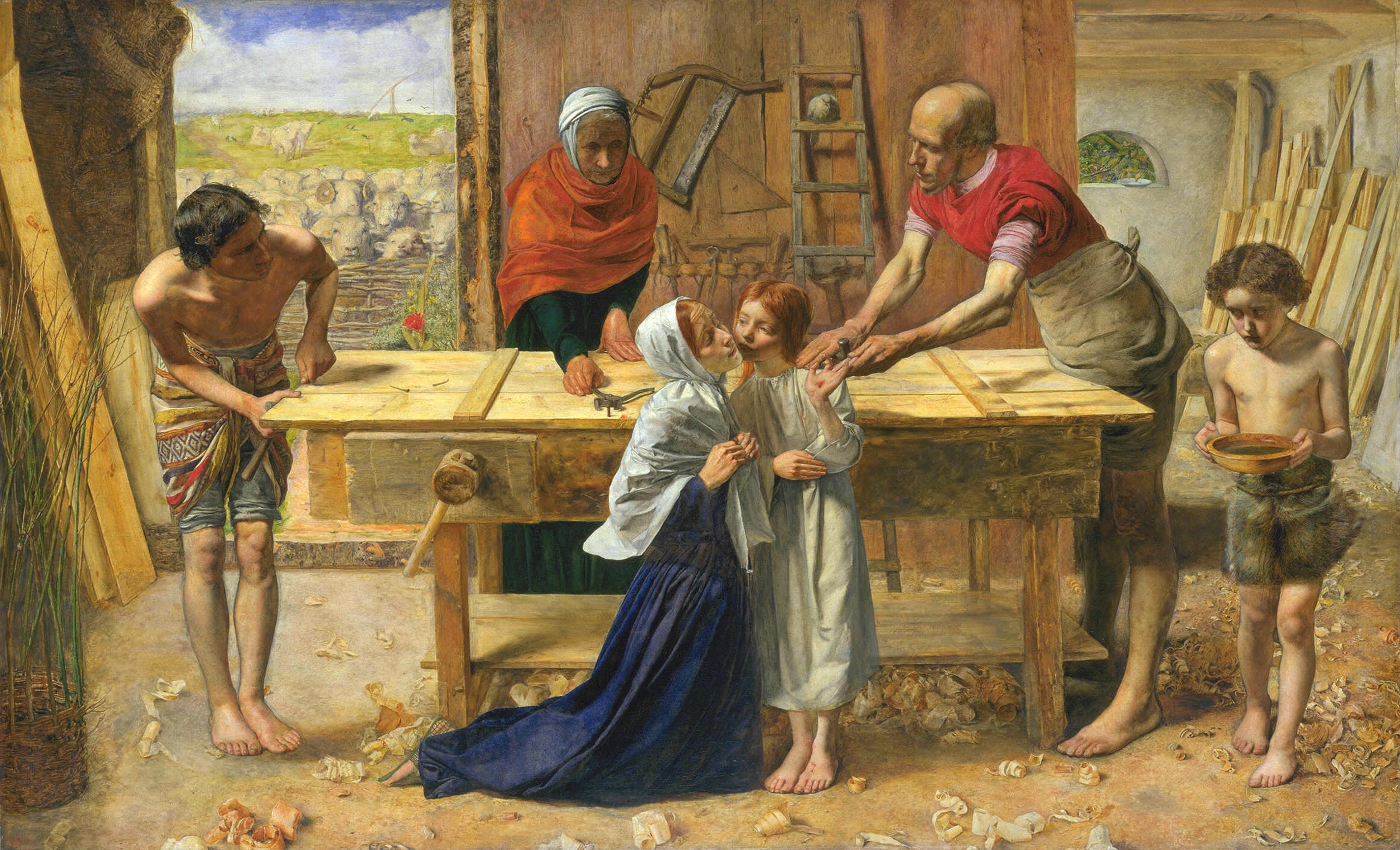
The Pre-Raphaelite Brotherhood (PRB) was a group of poets and artists formed in London in 1848. They were young, and bolshy, and sexually-charged, and absolutely no one expected their work to be as influential on visual culture as it subsequently was.
Pre-Raphaelite art is a rejection of Academic style. In lieu of the large, idealised Classical oil paintings which were considered to be ‘high’ and ‘fine’ art, the Pre-Raphaelites consciously returned to medieval methods of composition. Their main goal was to paint stories in a natural way, unadulterated by institutional conventions.
The use of the word ‘natural’ in relation to Pre-Raphaelitism might be confusing. Because it visibly lacks three-dimensionality, which is something you do find in Academic painting. However, ‘naturalism’ in Pre-Raphaelite painting doesn’t come from shading and modelling, but instead from the use of real models and real nature.
It also comes from their commitment to being true to nature: for instance, in Rossetti’s Annunciation, showing the Virgin Mary as a frightened little girl, rather than an idealised, perfect, Goddess.
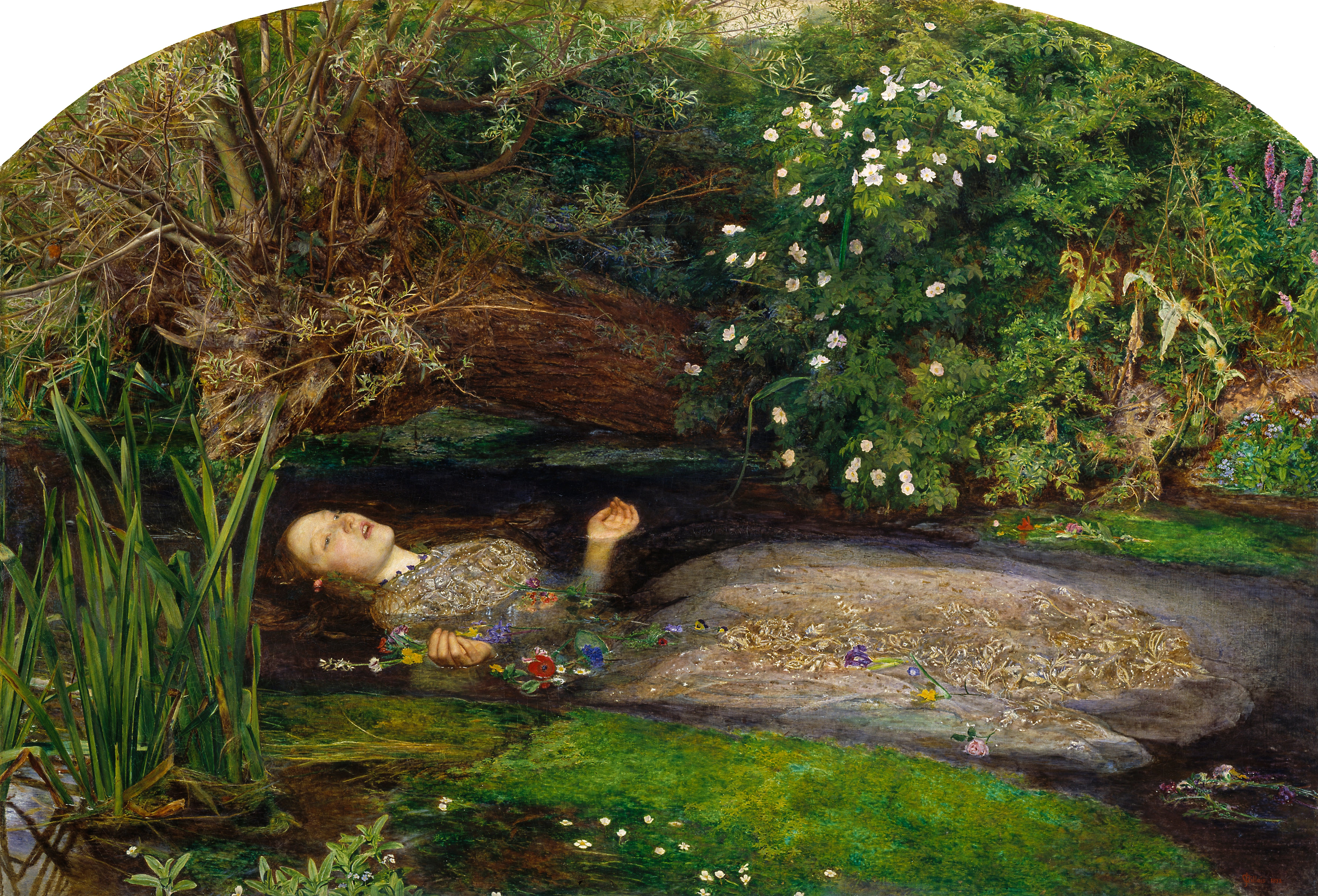
Ever since their conception, the Pre-Raphaelites have been looked down on in the art world. When their work was published and exhibited, it was termed by Victorian critics to be ‘vacant’, ‘fleshly’, and ‘self-indulgent’. Oscar Wilde said that the Pre-Raphaelites ‘had on their side three things which the English public never forgives: youth, power, and enthusiasm’.
In some ways, they’ve never really shaken off these criticisms. Pre-Raphaelite painting has a kind of mawkish and sentimental reputation. I worked briefly at a Pre-Raphaelite specialist art dealer in London. The paintings were difficult to sell, but those who were interested were really interested. The Pre-Raphaelites have a kind of cult following.
With that in mind, I’ve curated the following reading list, which might be useful for the PRB culties.
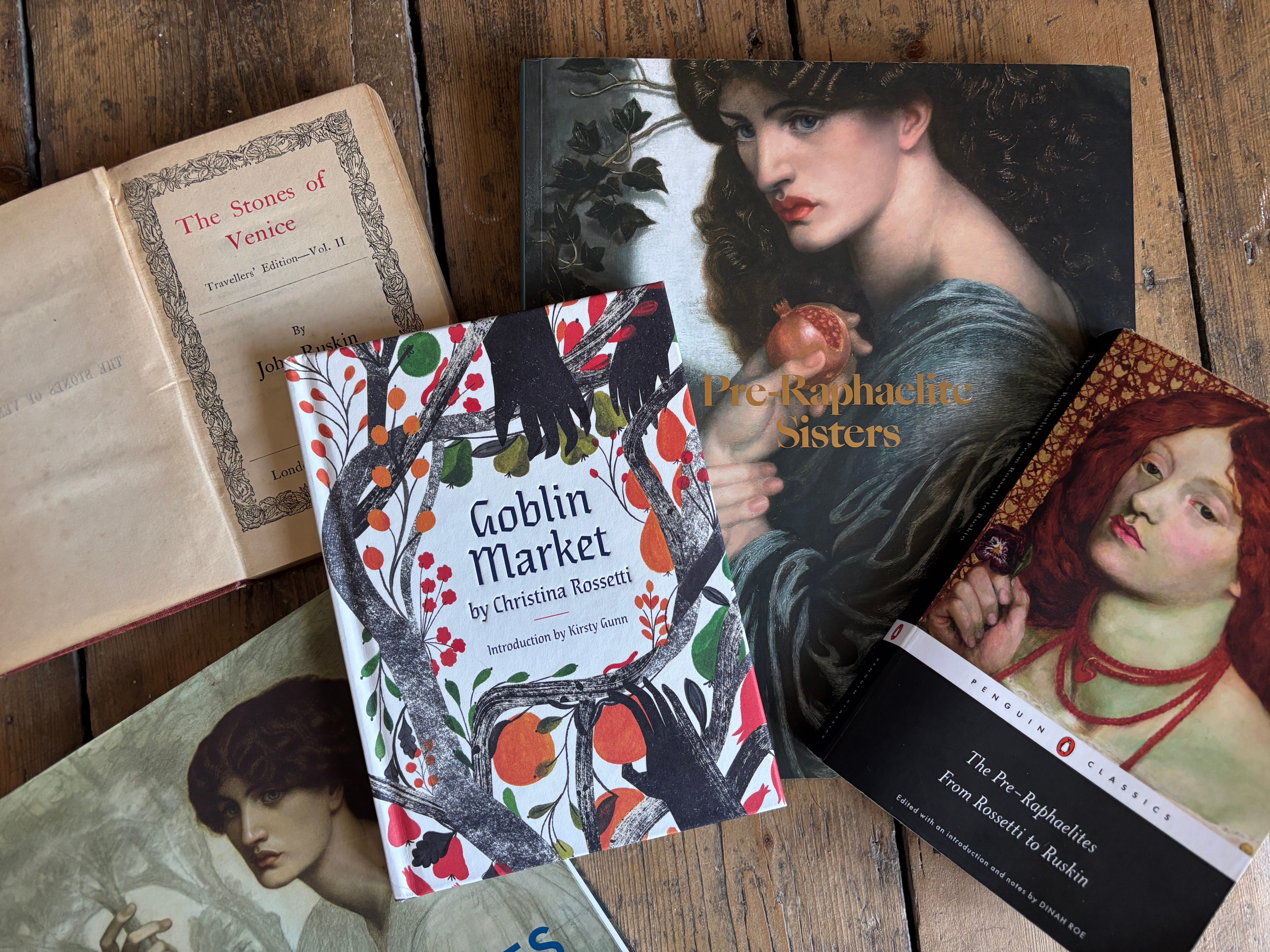
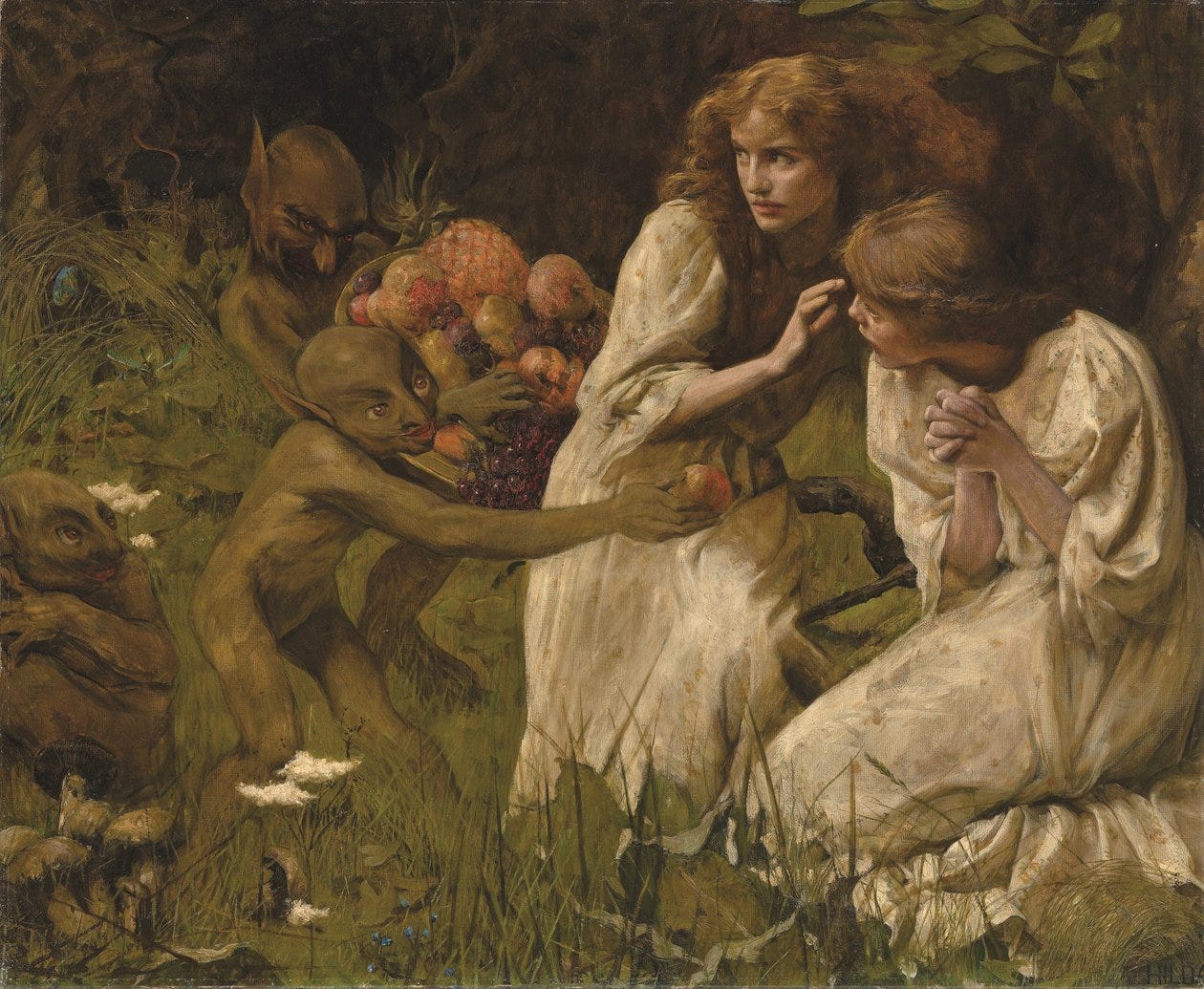
1. Christina Rossetti, Goblin Market (1862)
An intensely sensory, erotic, mysterious, fantastical poem about temptation, sisterhood, and morality. Christina Rossetti was the sister of Dante and William, and a key part of the Pre-Raphaelite poetic movement. This was the poem that cemented her status as a literary figure, and it’s ripe (pun intended — the poem is all about fruit!) for interpretation.
2. John Ruskin, The Stones of Venice, Vol ii (1851-1853)
John Ruskin is one of my favourite art writers. His prose is extremely painterly, and laden with lush, poetic description. But there’s also a strong political inflection to everything he writes. In The Stones of Venice (particularly volume ii), that inflection is distinctly Pre-Raphaelite.
If you’ve been here for a while, you’ll know I’m a fan of the Gothic. Well, so is Ruskin. And in this book he talks about how Gothic (that is, medieval) architecture is the most honest, sincere, truthful kind of art. Ruskin talks about how Gothic embraces irregularity, sublimity, and rejects the order and harmony of Classicism. He calls for a return to the time before the Renaissance. That’s Pre-Raphaelite all over!
3. Algernon Charles Swinburne, ‘The Poems of Dante Gabriel Rossetti’ (1870-75)
Infamous sensualist and freak-in-the-sheets Algernon Charles Swinburne was a proponent of Pre-Raphaelitism.
This essay is an impassioned defence and celebration of Rossetti as a major English poet, equal in stature to his achievement as a painter. Swinburne argues that Rossetti’s work is fundamentally synaesthetic, unifying the visual with the musical, and that his great strength as a poet lies in his unification of sacredness with eroticism.
The piece is highly rhetorical and partisan, but it sets an early critical framework for reading Rossetti as the central poet of the Pre-Raphaelite movement.
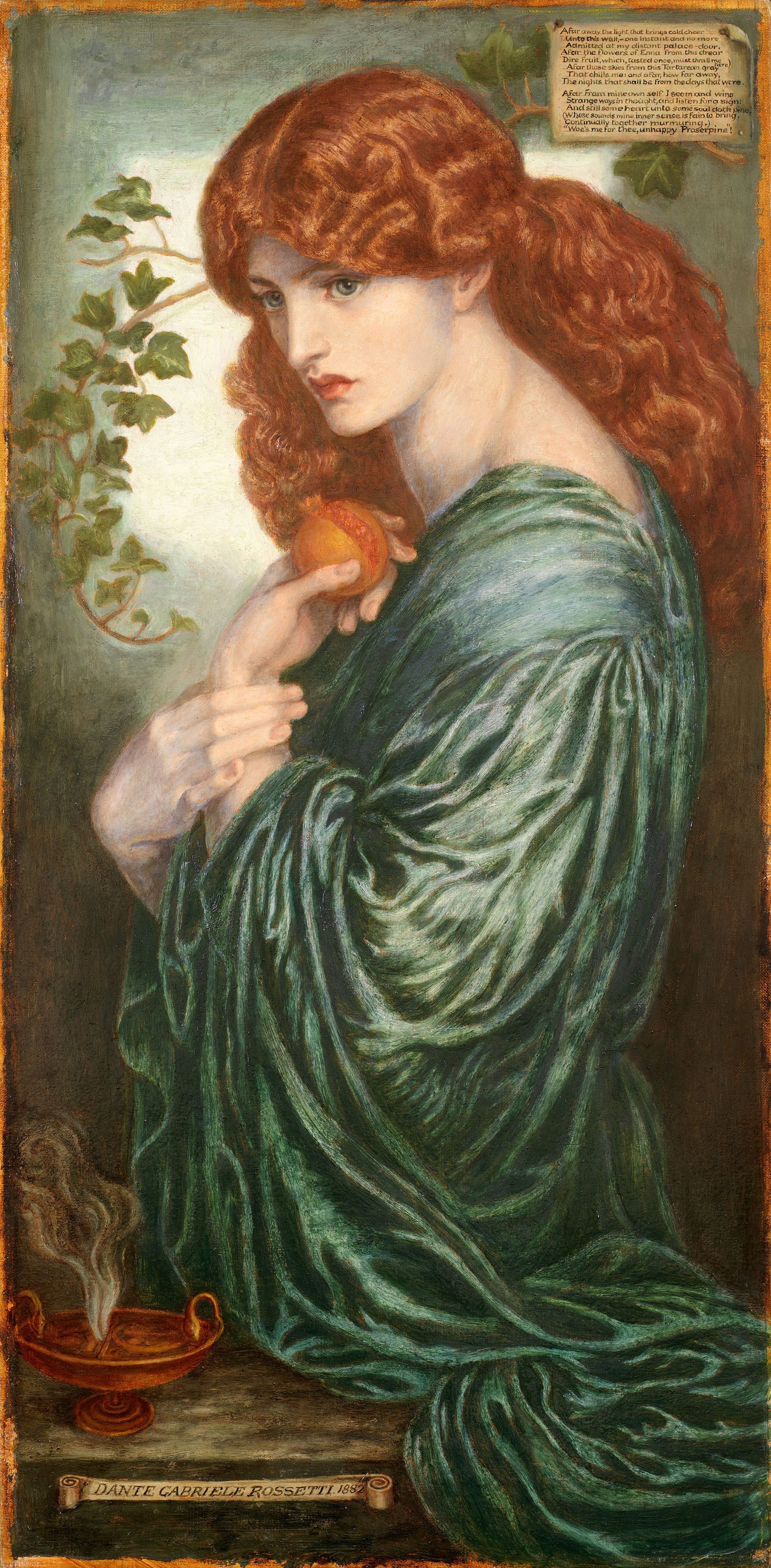
4. Jan Marsh, ed., Pre-Raphaelite Sisters (National Portrait Gallery, 2019)
Lots of people say that Pre-Raphaelitism was a male-dominated movement, which is absolute nonsense. Women were crucially and enthusiastically involved in it: and not only as muses and models, but also as poets and painters. The first work on this reading list is by a woman, for goodness sake!
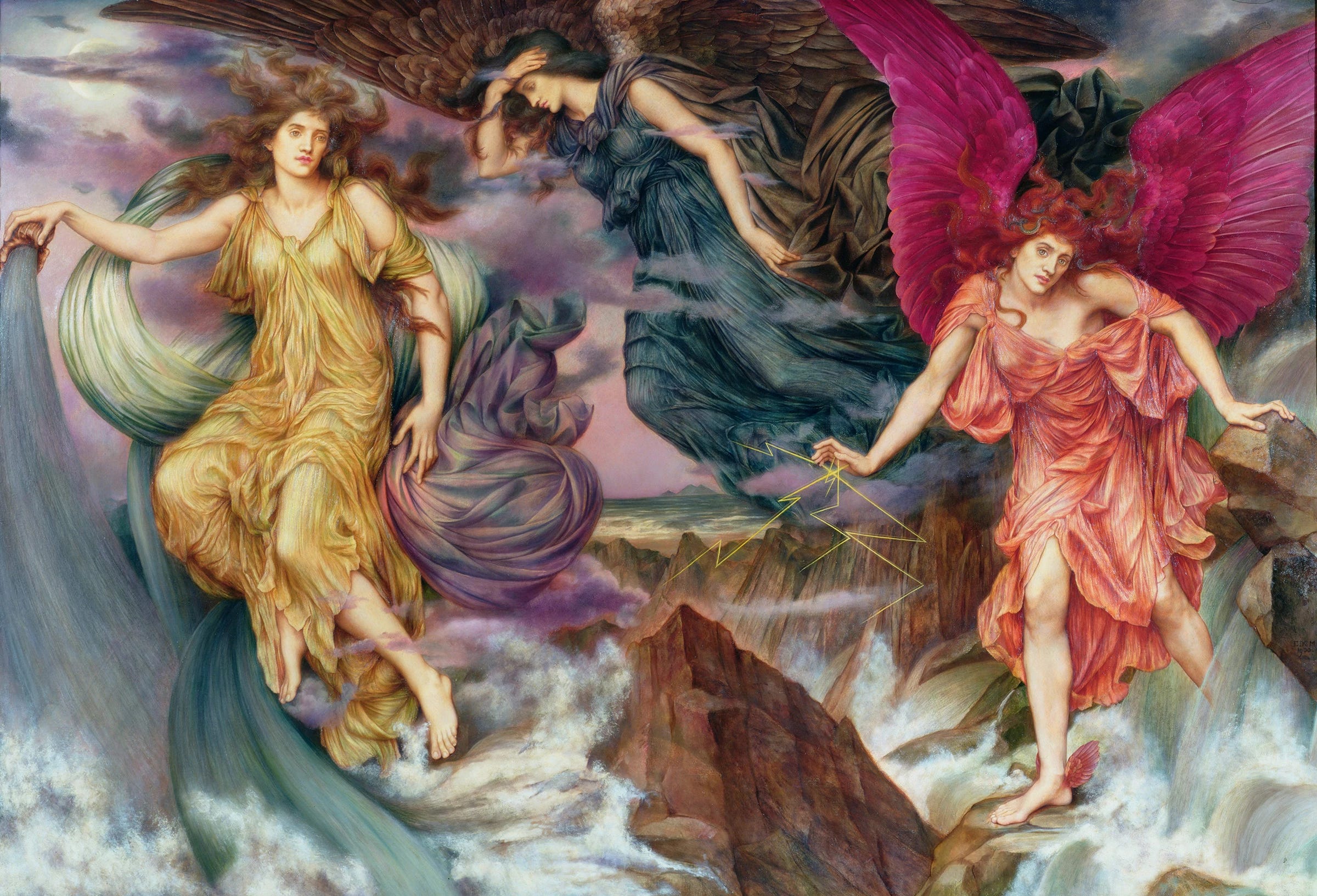
Anyway, Jan Marsh curated a fabulous exhibition on Pre-Raphalite women in 2019, and this is the exhibition catalogue. It covers Elizabeth Siddal, Christina Rossetti, Effie Gray Millais, Fanny Cornforth, Jane Morris, Georgiana Burne-Jones, Marie Spartali Stillman, and Evelyn De Morgan (my fave) among many others.
This is, I think, required reading for fans of Pre-Raphaelitism. The development of the movement depended on women.
Anyway, I’ll get off my soap box now.
5. Dinah Roe, ed., The Pre-Raphaelites: From Rossetti to Ruskin (2010)
If you’re looking for an overview of Pre-Raphaelite poetry, look no further than the penguin classics edition edited by Dinah Roe. Clear, chronological and with an excellent introduction.
This anthology is broad, including both canonical pieces like The Defence of Guenevere by William Morris and Nuptial Sleep by Dante Gabriel Rossetti, as well as lesser-read poems by minor figures like Coventry Patmore and James Collinson.
I hope that is helpful. And, if you’re ever confused as to what the Pre-Raphaelites are all about, you could do worse than to return to the manifesto set out by William Michael Rossetti (Dante’s brother), in his letters and memoir (published in 1895):
1, to have genuine ideas to express; 2, to study Nature attentively, so as to know how to express them; 3, to sympathize with what is direct and serious and heartfelt in previous art, to the exclusion of what is conventional and self-parading and learned by route; and 4, most indispensable of all, to produce thoroughly good pictures and statues.
Thanks for reading! If you’d like to support my work, but can’t commit to a full-time subscription, why not leave a tip?
Check out my Instagram at @culture_dumper and my TikTok @theculturedump, where I post daily updates.
Love this and LOVE the Goblin Market -- I wrote an entire short story retelling the poem in an early 2000s mall! Christina Rossetti is brilliant!
Great list!! I remember reading Goblin Market for the first time and being surprised at how 'rap like' it was!